Most wedding budgeting starts and ends with one number: the average cost. That figure matters less than most people assume, because a wedding isn’t one bill. It’s a sequence of separate payments, each with its own deadline, spread across months.
Budgeting for the total without planning for the timeline is where most wedding money stress actually comes from.
The cost of a wedding
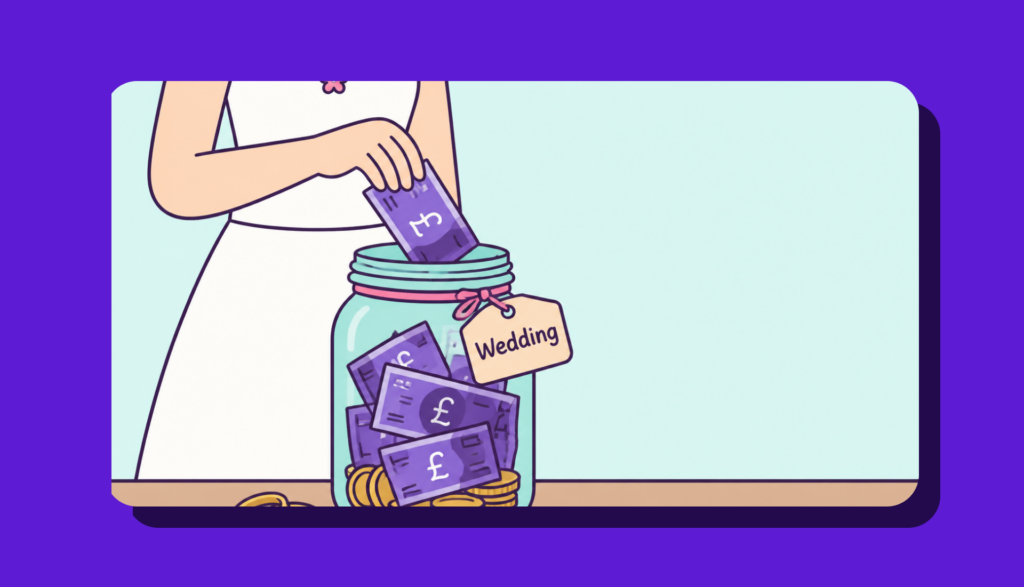
Bridebook’s 2026 UK Wedding Report surveyed 7,000 couples from the UK and calculated an average wedding cost of £20,604. This total excluded the ring and honeymoon.
Hitched’s industry report puts the average figure slightly higher, at £21,990.
It’s unsurprising that the cost varies; wedding costs don’t arrive as one bill and each outgoing runs along its own independent timeline. Consider the following wedding costs:
- Booking deposits. Venues and popular suppliers typically require a deposit to secure a date, often months or over a year in advance.
- Progress payments. Many suppliers, especially venues, split the remaining balance into stages rather than one final bill.
- Final balances. Caterers, florists, and photographers commonly invoice a few weeks before the day itself.
- Last minute panics. Service charges, evening food, and last-minute additions tend to surface right at the end.
It’s sensible that, rather than simply budgeting against the total end cost, you should be well prepared for the various timings of outgoings.
Building the budget
- Your first move should be to list every supplier and when their deposit is due. We recommend a spreadsheet, so that you can easily track and update any changes.
- Map those dates against your own income, not just your total savings.
- Identify the months where two or more deposits land close together to lessen the pressure.
- Decide in advance whether savings, a fixed-rate loan, a credit card or a mix of different payment methods is best suited for you.
Where borrowing fits
A fixed loan amount and a fixed monthly repayment can smooth the sequence of wedding costs into one predictable line, rather than a scramble to have the right amount available at each stage.
However, if your savings comfortably cover the full timeline without leaving you short elsewhere, you may not need to borrow at all. It’s worth comparing what a loan would actually cost against what depleting your savings would cost you, the same comparison worth running for any large purchase.
Loan approval and the rate offered depend on individual circumstances and are subject to an affordability and credit assessment. Remember that borrowing costs more overall than paying from savings, so compare the total repayable amount before deciding.
Final Thought
Looking to pay off credit card debt? If you’re looking to consolidate credit card debt and cut down on high interest, check your eligibility for Updraft, or download our app today.
Loans from 15.3% APR (25.9% APR Representative)
25.9% APR Representative based on a £10,000 loan over 60 months at 20.40% fixed interest p.a. Monthly repayment: £283.20. Total repayable: £16,992 (inc. £600 fee). Subject to status and affordability. Consolidating debt may increase the term and total amount repaid. All figures are representative and based upon an assessment of credit and affordability. Terms and conditions apply.
From 15.3% to 41.2% APR, £1,000–£25,000, over 2–5 years available.
About Updraft
Updraft helps people pay off credit card debt. Using open banking and credit data, it shows people what they owe across their cards and overdrafts and helps them build a plan to clear it. More than a million people have used Updraft to pay off over £850 million in credit card and overdraft debt. Updraft is authorised and regulated by the Financial Conduct Authority and operates under Fairscore Ltd.
Frequently asked questions
Should we budget from the average wedding cost or build our own from scratch?
Build your own. Averages are a sanity check, not a plan, since venue, region, and guest count change the total more than any single average can capture.
What's the most commonly underestimated wedding cost?
On-the-day extras: service charges, evening food, and last-minute supplier add-ons tend to be smaller individually but add up more than couples expect when totalled.
Is it better to pay everything upfront if we can afford to?
Not necessarily. Spreading payments across a fixed monthly budget, rather than emptying savings early, keeps a buffer available for the unexpected costs that tend to appear closer to the day.